
How to schedule restaurant and café staff: 6 practical steps
3 min read

Scheduling in restaurants and cafés is a weekly puzzle: enough people at peak, not too many when it is quiet, everyone gets a day off, nobody stuck on late shifts all week. Here is how well-run shops do it.
1. Start from customer traffic
Use sales or orders by hour from the last 2–4 weeks to decide how many people each role needs in each time slot.
2. Define shift templates first
- Morning 7 a.m.–3 p.m.
- Evening 3–11 p.m.
- Split shift 10 a.m.–2 p.m. and 5–9 p.m. for peaks
- Night or overnight shifts if you open late
3. Ask for availability first
Have staff register availability by a fixed deadline before you build next week’s rota.
4. Keep it fair
- At least one day off each week.
- No closing shift followed by an opening shift.
- Rotate weekend and holiday shifts.
- Watch the 40-hour monthly overtime limit.
5. Have rules for swaps
Swaps go through a request with a replacement and manager approval, so the rota is always right.
6. Copy last week, adjust
Most weeks are alike — copy and change only what differs.
Scheduling with CTAS Work
CTAS Work does all of this on phone or computer: shift templates (including overnight and multiple shifts a day), weekly rotas, copying last week, self-registration and swap requests approved in one tap. Clock-ins are matched to shifts and flow into payroll. Download CTAS Work.
Related articles
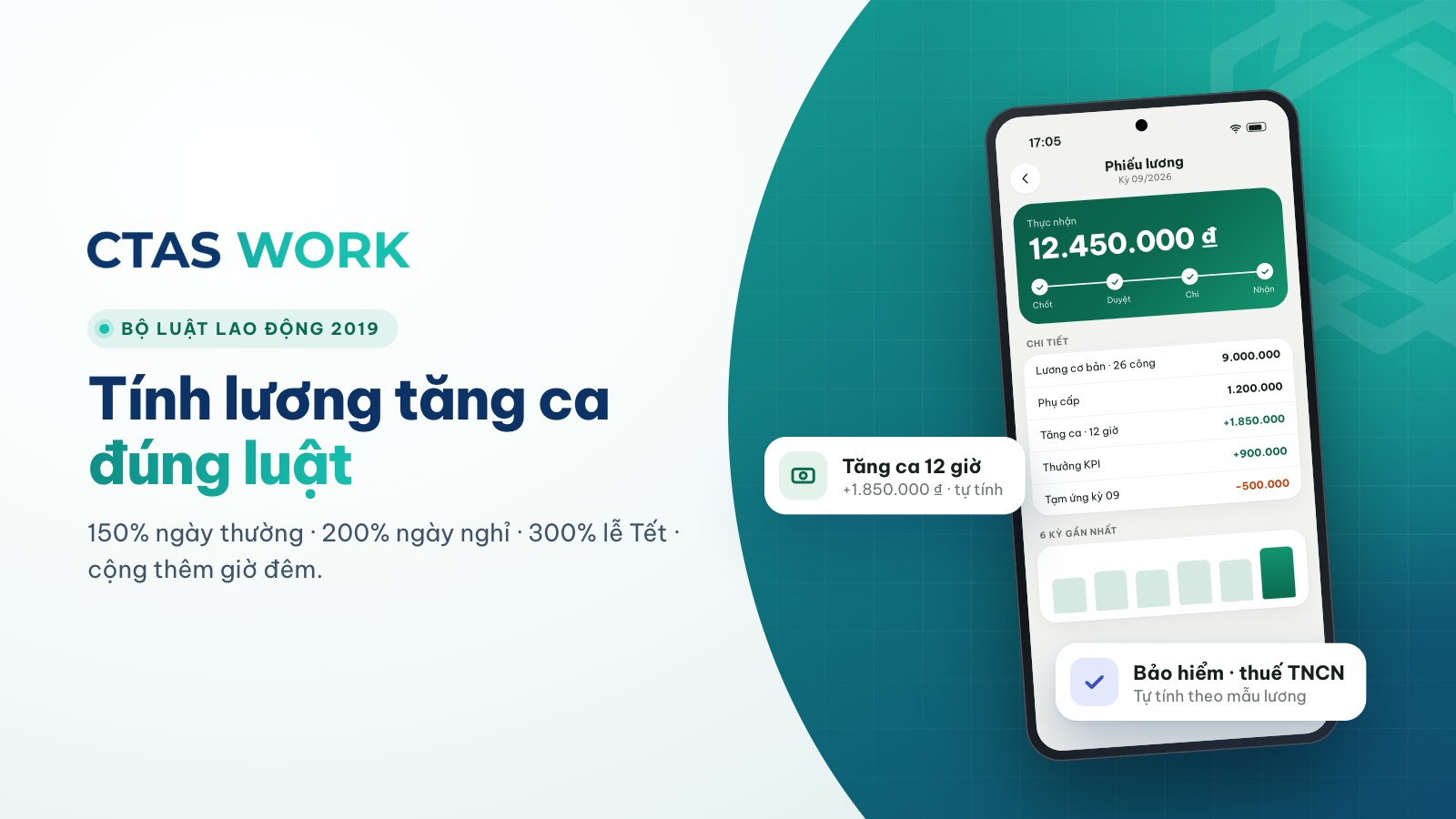
Overtime pay under Vietnam's 2019 Labour Code, with a worked example
150% on weekdays, 200% on days off, 300% on holidays, plus 30% and 20% at night — each rate explained and calculated for a barista.
4 min read

How to calculate annual leave: 12 days, part-year staff and seniority
Days per year, new starters, one extra day every 5 years, unused leave when someone leaves — plus three common shop situations.
4 min read
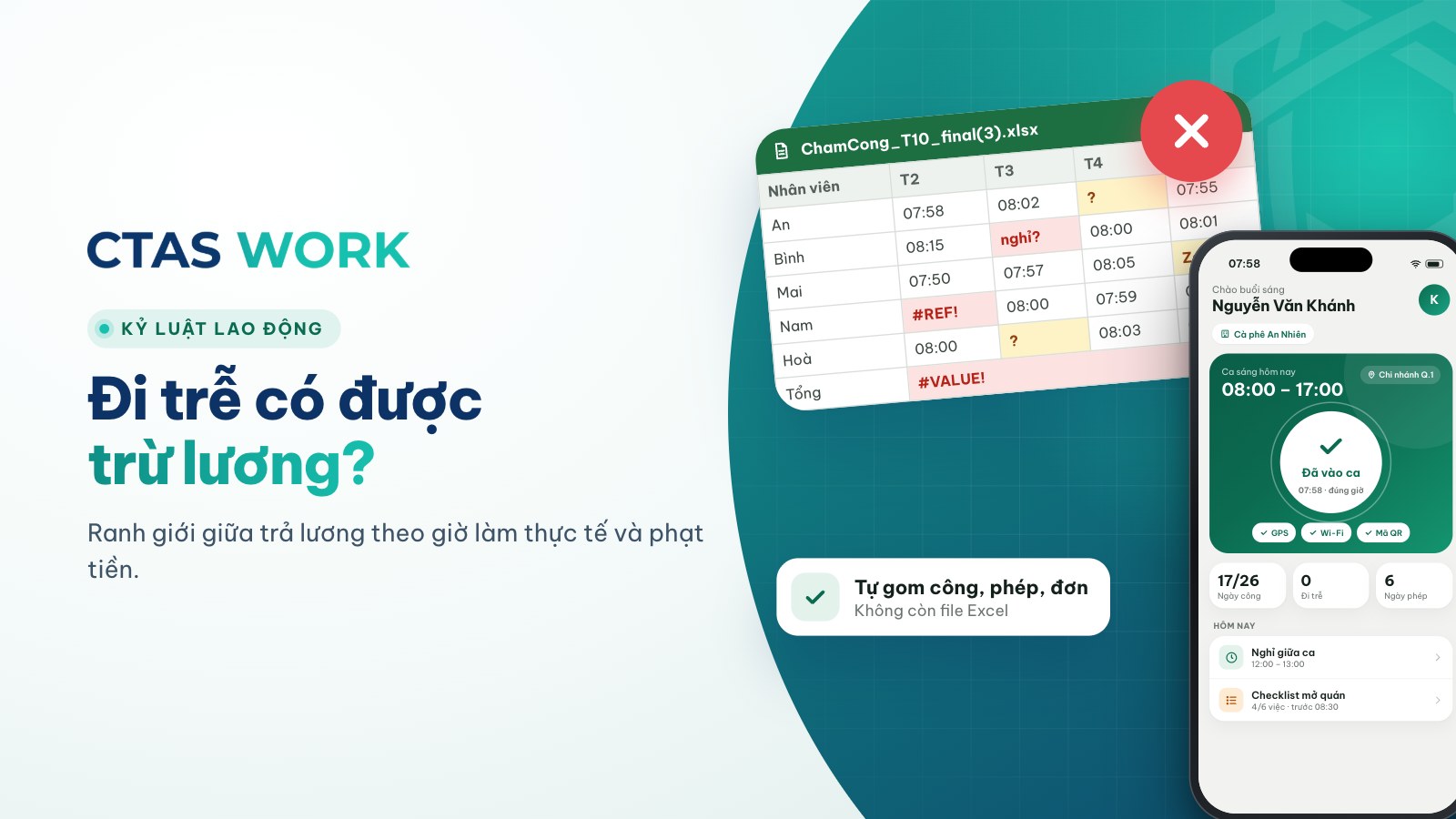
Can you dock pay for lateness? Paying for time worked vs. fining
The law bans fines and pay cuts as discipline. Is “15 minutes late, 50,000 VND off” wrong? How to handle lateness legally.
4 min read